Google launches Lyria 3 in Gemini to create AI music
TL;DR
Google released Lyria 3 in Gemini, enabling 30-second AI-generated songs from text, images, or videos.
Lead
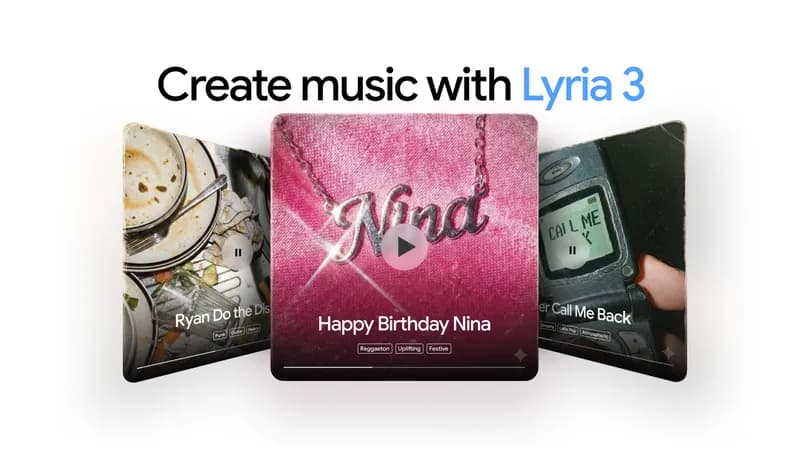
Google launched the Lyria 3 tool in the Gemini app, allowing users to generate 30-second songs from text, images, or videos. This new feature is available globally for users aged 18 and over and aims to simplify music creation through artificial intelligence.
Development Section
Lyria 3, developed by DeepMind’s team, marks a major upgrade from previous versions, enabling music generation in various styles, from jingles and lo-fi beats to more complex arrangements. Users can create custom tracks by describing genres, moods, or even specific themes, like a “comedic R&B about a pair of socks meeting,” as Google exemplifies.
The feature is available on Gemini’s desktop app, with a mobile version coming soon. Users can find the music option under the app’s “Tools” menu. The tool supports multiple languages, including English, German, Spanish, French, Hindi, Japanese, Korean, and Portuguese, with plans to add more languages later.
One key innovation of Lyria 3 is its ability to automatically generate lyrics based on user prompts, removing the need to provide lyrics manually. Users can also upload photos or videos to create personalized soundtracks within seconds. To assist users, Google offers a prompt guide to help craft their songs.
Lyria 3 not only improves audio quality but also gives greater control over individual music elements like style and tempo. Generated tracks carry a SynthID watermark that identifies the content as AI-generated, ensuring it’s not mistaken for human-made productions.
Developments and Outlook
Lyria 3’s launch comes amid growing concerns about copyright in AI-generated music. Google stated it is “mindful” of copyright issues during model training and that Lyria is not designed to imitate existing artists. Musicians who feel their rights are violated can report the content.
Promising to ease music creation, Lyria 3 may attract content creators on platforms like YouTube, where it could integrate with the “Dream Track” feature to generate soundtracks for short videos, as well as musicians seeking new creative outlets. Google appears poised to expand this technology across other platforms, such as Google Messages.
To try Lyria 3, users must be adults and speak one of the supported languages. This innovation signals Google’s intent to deepen its presence in AI-driven creative tools, expecting this feature to become a core part of digital music creation.
Content selected and edited with AI assistance. Original sources referenced above.