Intelition Revolutionizes Interaction Between Humans and AI
TL;DR
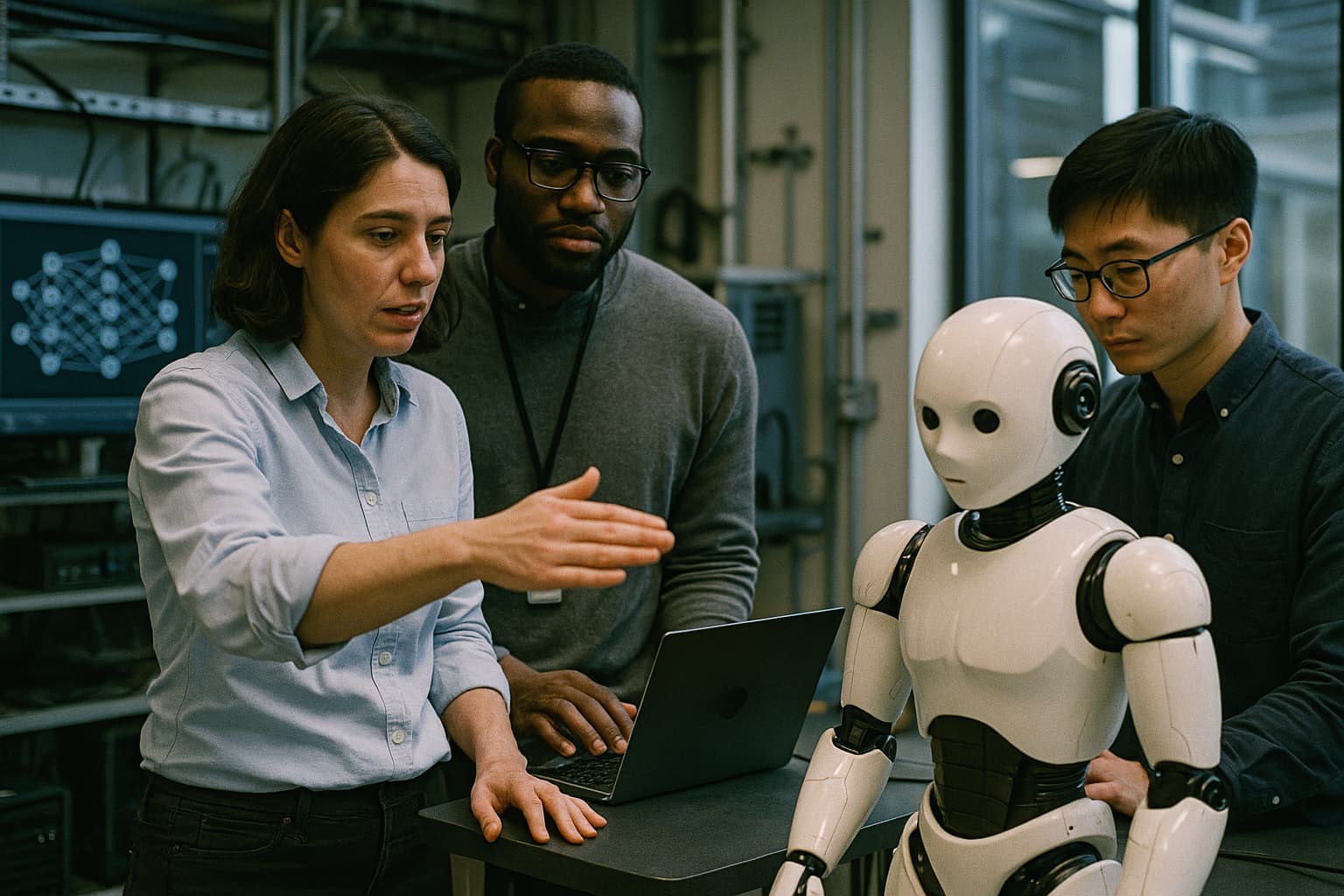
Artificial intelligence technology is rapidly evolving, transforming into a collaborative tool between humans and machines. This concept, called intelition, refers to the union of intelligences, where both interact in real-time to perceive, decide, and act.
The technology of artificial intelligence (AI) is rapidly evolving, transforming into a collaborative tool between humans and machines. This concept, called intelition, refers to the union of intelligences, where both interact in real-time to perceive, decide, and act.
Unlike the current model, where AI is invoked as an external resource, intelition represents a new organizational principle. In this new paradigm, humans and AI systems shape decisions and actions together, allowing for continuous production.
This article analyzes the three factors that are driving this new approach.
The Importance of a Unified Ontology
In a letter to shareholders, Alex Karp, CEO of Palantir, emphasized that the future market value lies in chips and in ontology, a shared model of objects and their relationships. For companies, creating a consolidated corporate ontology is essential, albeit challenging due to the complexity of existing models.
A unified ontological model is essential for the functioning of AI agents. This allows AI to reason and act in a broader ecosystem that encompasses suppliers and customers, not limited to a single application.
World Models and Continuous Learning
Retention of information does not necessarily imply learning. Continuous learning is essential for the evolution of AI models. The Nested Learning solution, announced by Google, aims to integrate long-term memory into the learning system, eliminating the need for retraining.
Yann LeCun, Chief AI Scientist at Meta, developed the H-JEPA approach for autonomous intelligence, enabling models to predict using real-world context. Research in this field has led to the development of open models that comprehend visual representations.
The Personal Interface of Intelition
The personal interface stands out as a central force in this new paradigm. Unlike traditional interfaces, it places the user at the center, acting continuously and being aware of the individual’s context and preferences.
Recently, Jony Ive sold his AI device company, highlighting the responsibility in creating innovative technologies. In parallel, Apple is seeking solutions that comprehend the user’s intention for AI applications, aiming for greater efficiency and personal data security.
Tim Berners-Lee, inventor of the Web, warns that users are currently treated as consumable products. His project Solid aims to restore control over personal data, essential for the development of personalized AI devices.
The three factors discussed are rapidly converging, shaping a new era of software where intelition is not just a possibility but a reality. The future of this technology implies safer and more integrated interactions, promoting a new form of collaboration between humans and machines.
Brian Mulconrey is SVP at Sureify Labs.
Content selected and edited with AI assistance. Original sources referenced above.