Understand how Google Genie 3 impacts the gaming market
TL;DR
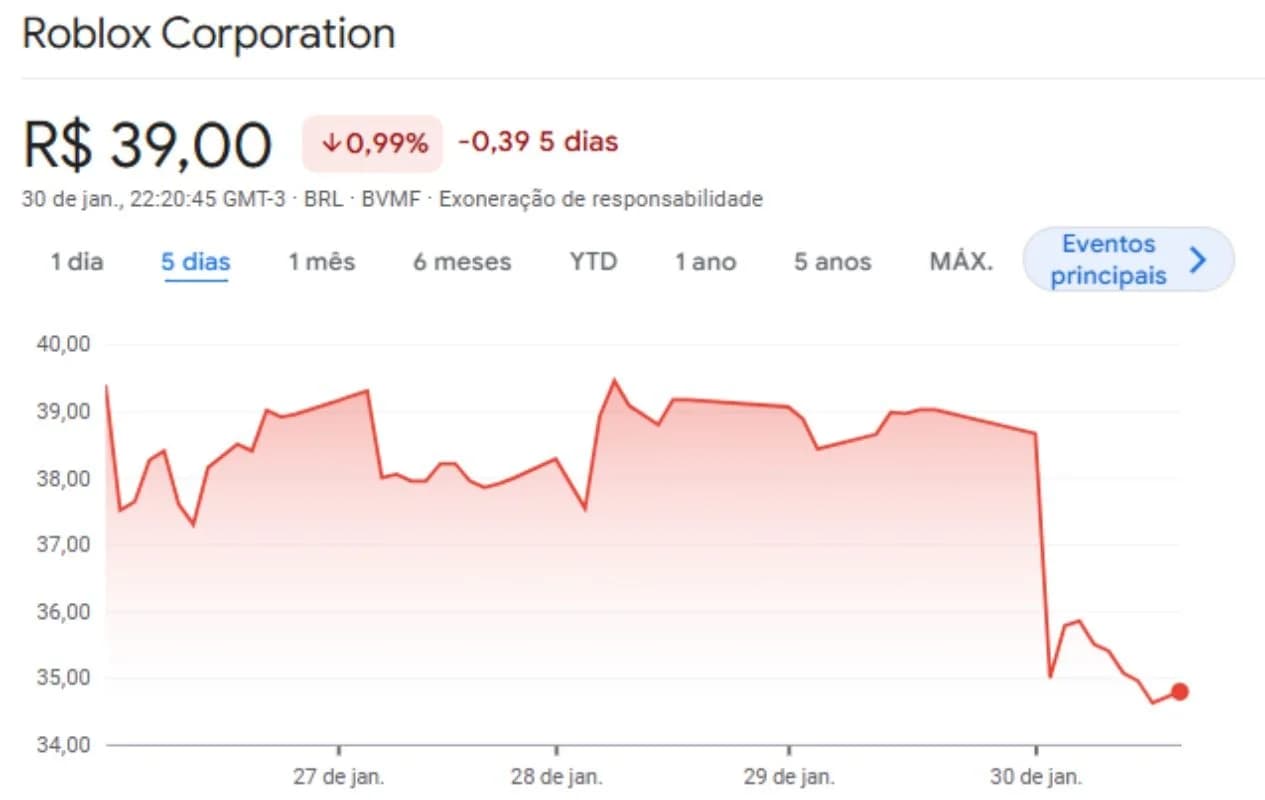
On Friday (30), Google's new artificial intelligence, Project Genie 3, caused a sharp drop in the stocks of major gaming companies. This technology generates interactive worlds from text commands.
On Friday (30), Google's Project Genie 3, the new artificial intelligence, triggered a sharp decline in the stock prices of major gaming companies. This technology generates interactive worlds from text commands. Investors reacted intensely, resulting in significant losses for companies like Take-Two Interactive, known for franchises like GTA and Red Dead Redemption.
Take-Two saw its value drop nearly 10% in a single day, representing a depreciation exceeding $3.5 billion. Other companies, such as Unity, CD Projekt Red, and Nintendo, also faced significant declines, indicating a widespread panic in the market.
Experts point out that the market's reaction is more a response to the concept of artificial intelligence than a real threat to the development of currently established games.
What is Genie 3 and why does it cause concern?
Genie 3 is described by Google as a "general model of worlds" that creates navigable 3D environments in real-time, using text prompts. The technology is capable of providing experiences at 24 frames per second in 720p resolution, although it lasts only a few minutes, typically around 60 seconds.
This means that a user can explore an environment generated by AI, but without clear objectives or a defined narrative, characterizing it as more experimental. Despite demonstrations involving worlds inspired by Fortnite and GTA going viral, the fear generated among investors appears to have surpassed the actual capabilities of the system.
Impacts of Google Genie 3 on the gaming sector
The depreciation of Take-Two's shares was not an isolated occurrence. Unity, for example, saw its value drop by up to 20%. The prevailing sentiment in the market is that the possibility of anyone creating a game using AI could result in the diminishing relevance of traditional studios.
Bloomberg journalist Jason Schreier emphasizes that the market's reaction reflects a lack of understanding of the technology. Although the images generated by Genie 3 are impressive, the solution is still far from challenging the major players in the industry.
Clarifying the functionality of Genie 3
Neri Neto, a specialist in game development and artificial intelligence, highlights in an interview that Genie 3 was not designed to create games, but rather for training machines and robots. He mentions that this is an important step in the advancement of AI, using entertainment generation as a secondary application.
"Genie 3 was not created to make games, but to train machines and robots"
This technology is essential for complex digital simulations, crucial for progress in robotics and AI. Its use in games is seen as an additional commercial attribute rather than the primary goal.
Limitations and potential of Genie 3
Despite its visual features, Genie 3 remains limited. The generated worlds are brief and often inconsistent, unable to sustain crucial elements of any AAA game, such as narrative or robust progression.
Investigations show that many of the popular examples online are recreations of existing games, raising questions about intellectual property. From Neri Neto's perspective, this adds to the experimental nature of the technology.
He also comments that Genie 3 was launched in a controlled manner to understand its repercussions among users. The future of the technology is still uncertain, but it presents unexplored potential.
The security of the gaming industry
Even though the market's reaction has been severe, the gaming industry overall remains solid. Major studios have the resources and reputation to withstand short-term declines.
The main concern, according to Neri Neto, falls on independent developers, especially those creating simple experiences. The impact seems to be more focused on mobile applications and less complex games, which can be replicated by automated systems.
A survey from Google Cloud reveals that 90% of game developers already use some type of artificial intelligence in their processes, highlighting that technology is part of the industry's daily routine.
Future perspectives of the technology
The disproportionate reaction to stocks demonstrates how sensitive the market is to innovations in artificial intelligence. Regarding Genie 3, the effects appear disproportionate to its current capabilities.
The gaming industry has survived more radical changes and has adapted over time. Genie 3 may not change the current landscape but could give rise to a new market, with unprecedented forms of creation and consumption, including possible signs of monetization similar to popular platforms.
In this new era, the role of major studios may change, but should not lose importance. The relationship with games involves complex aspects that go beyond mere world creation. It is essential to consider what the public values and assesses in their experience.
Content selected and edited with AI assistance. Original sources referenced above.