Understand how passkeys replace passwords in online authentication
TL;DR
The need for security on digital platforms grows with the increase in data breaches. Passkeys, a new authentication technology, emerge as an alternative to traditional passwords, eliminating the need to remember complex codes. Adoption by companies like Microsoft, Google, and Apple signals its relevance, but general knowledge is still limited.
The need for security on digital platforms grows with the increase in data breaches. Passkeys, a new authentication technology, emerge as an alternative to traditional passwords, eliminating the need to remember complex codes. Adoption by companies like Microsoft, Google, and Apple signals its relevance, but general knowledge is still limited.
Designated as access keys, passkeys allow access to online accounts without typing in a username and password. This innovation uses a mobile phone or another device to verify the user's identity, making the process more secure and faster.
What is a passkey?
Passkeys, developed by the Fast Identity Online (FIDO) Alliance, utilize a two-key system: a public key, stored on the online service, and a private key, kept on the user's device. This combination offers an efficient and secure way of authentication.
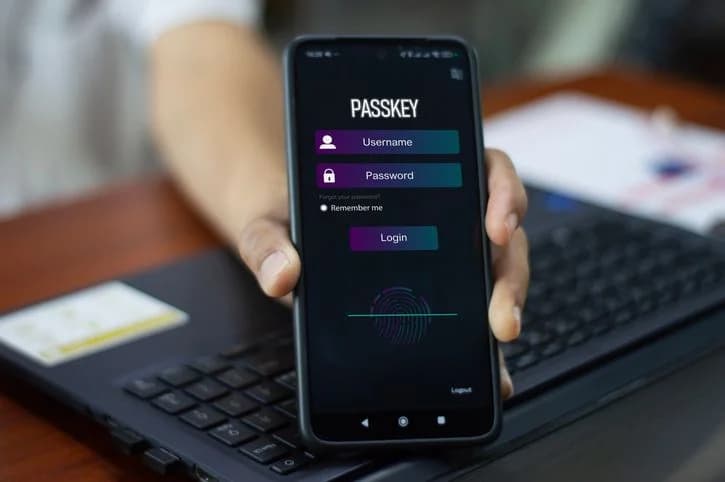
When accessing an email or service using a passkey, the user activates an authenticator device. Instead of entering passwords, identity confirmation is performed via facial recognition, fingerprint, PIN, or unlock pattern.
Difference between passkey and traditional password
While conventional passwords require frequent typing, passkeys allow for authentication through biometrics or PIN. This approach not only offers greater convenience but is also an effective measure against cybercrimes.
Moreover, passwords are widely supported across various online services, while passkeys are still limited to a restricted number of platforms, although interest and adoption are growing.
Services like Microsoft, Discord, and iCloud have already adopted passkeys as a method of authentication. For accounts like WhatsApp and Uber, the option for biometric authentication is also available.
How passkeys eliminate risks?
Passkeys provide superior security as they are less vulnerable to methods like phishing. Even if the user tries to access a fraudulent site, the private key remains on the device, reducing the risk of data theft.
Additionally, in the case of data breaches on online services, the private key remains inaccessible to intruders, ensuring the protection of the user's account. This represents a significant improvement in digital security.
Practical functioning of the passkey
To use a passkey, the login process is simple and quick, generally involving the following steps:
- Access the website or app and choose the option for login with passkey.
- Provide your username and wait for a challenge to be sent to the authenticator device.
- Confirm your identity using biometrics or a PIN.
- Access is granted without the need to type in passwords.
Additionally, it is possible to integrate passkeys with other methods, such as multi-factor authentication, offering an extra layer of security for users.
Advantages and disadvantages of passkeys
High security is the main advantage of passkeys, providing protection against unauthorized access and data breaches. Furthermore, they eliminate concerns regarding the storage of complex passwords.
However, passkeys still face challenges. Their availability is limited to selected platforms and the latest versions of operating systems, which can be limiting. The reliance on the authenticator device for access also represents a weak point.
Despite initial resistance from some users, passkeys hold potential to revolutionize online security, provided that their challenges are overcome. In the near future, this technology could become a standard for authentication across the digital world.
Do you already use passkeys for your accounts, or do you prefer traditional passwords? Share your opinion on social media.
Content selected and edited with AI assistance. Original sources referenced above.