OpenAI reveals Codex architecture for AI app integration
TL;DR
OpenAI has unveiled the detailed architecture of the Codex App Server. This innovation streamlines AI integration across various platforms.
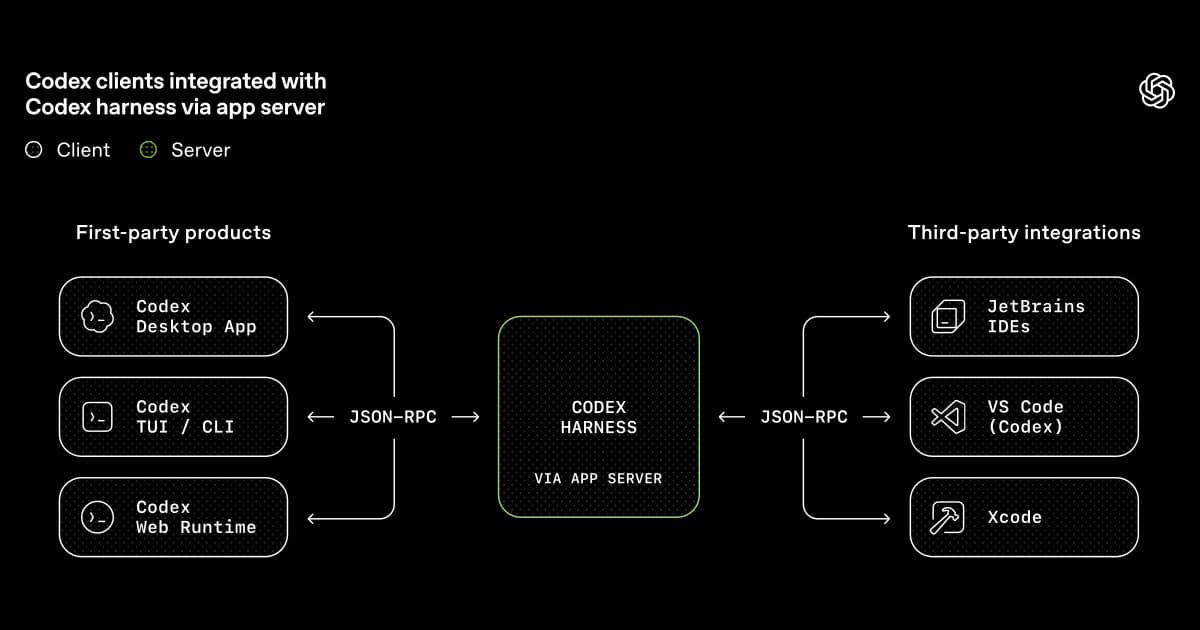
OpenAI has recently released the detailed architecture of the Codex App Server, a bidirectional protocol that separates the core logic of the Codex coding agent from its various client interfaces. The App Server now powers all Codex experiences, including the CLI (Command Line Interface), the extension for VS Code, and the web app, through a single, stable API (Application Programming Interface).
The Codex App Server is designed to simplify the integration of AI agent surfaces, providing a unified interface. This means that any updates to the core Codex logic can be implemented more efficiently across all supported platforms. The stable API facilitates communication between the server and different clients, ensuring that updates remain compatible with previous versions.
With the new architecture, developers can create and integrate applications using Codex more quickly and efficiently. This advancement is significant, as Codex is used in various areas, from code automation to programming assistants, and the need for a stable API is crucial for maintaining consistency and performance across multiple platforms.
In the future, this architecture is expected to enable greater innovation in how Codex is implemented and used, reducing development time and improving user experience. OpenAI continues to enhance its technologies to provide more integrated and effective solutions.
The main takeaway is that OpenAI is focused on optimizing Codex integration, ensuring a stable API that facilitates updates and maintenance across various platforms, which is crucial for developers.
Content selected and edited with AI assistance. Original sources referenced above.