AMD Launches Ryzen AI Max+ and Ryzen 7 9850X3D Chips at CES 2026
TL;DR
AMD introduces new options for desktop enthusiasts with the Ryzen AI Max+ line and the Ryzen 7 9850X3D at CES 2026.
AMD showcases new options for desktop enthusiasts with the Ryzen AI Max+ line and the Ryzen 7 9850X3D at CES 2026. The Max+ chips target compact desktops and high-performance laptops, while the 9850X3D provides an alternative for gamers seeking performance with 3D V-Cache, without the $700 price tag of the top-tier model.
Last year, AMD introduced the Ryzen AI Max, designed to integrate CPU, GPU, and Neural Processing Units (NPUs) into a single chip. This development was inspired by the success of the Apple Silicon architecture, as mentioned by Joe Macri, AMD's Vice President.
Macri emphasized that consumer perception of graphical quality has changed. "What Apple demonstrated is that consumers care more about what the device does and how it performs, rather than simply seeking dedicated graphics," he stated during last year's CES.
At CES 2026, AMD revealed the Ryzen AI Max+ 392, a 12-core chip, and the Ryzen AI Max+ 388, an 8-core chip. Both models feature speeds of up to 5GHz and capacities of 50 TOPS for NPUs, along with GPUs achieving 60 TFLOPs.
The previous version of the Ryzen AI Max chips was used in systems like the Framework Desktop and the ROG Flow Z13, where the performance was deemed satisfactory for compact systems, eliminating the need for dedicated GPUs.
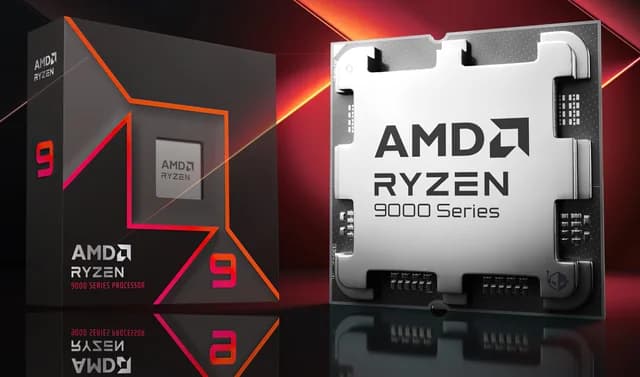
The Ryzen 7 9850X3D is an 8-core chip with speeds of up to 5.6GHz and a total of 104MB of L2 and L3 cache, also leveraging 3D V-Cache technology to stack additional memory. In comparison, the standard 9850HX chip has 76MB of cache.
AMD plans to launch the Ryzen AI Max+ chips and the 9850X3D in the first quarter of this year. While there is no official pricing information available, rumors suggest that the 9850X3D may retail for around $200, while a dual-cache version with 192MB, the 9950X3D2, is expected to be announced shortly.
With these innovations, AMD positions itself to meet a growing demand for performance and efficiency in desktop systems, reflecting current trends in the technology market.
Content selected and edited with AI assistance. Original sources referenced above.