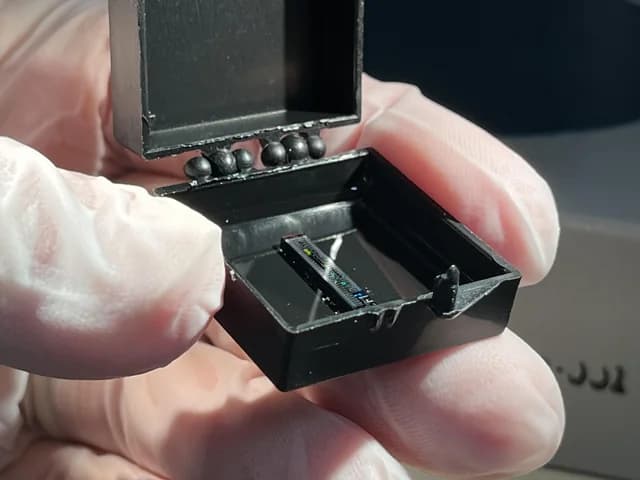
Flexible Chip Developed for In-Memory Computing in Edge Intelligence
TL;DR
A new digital chip that uses compute-in-memory architecture and is flexible promises to revolutionize daily activity monitoring, with applications in edge intelligence systems.
Research on Artificial Intelligence Chip
A new digital chip, utilizing a compute-in-memory architecture and being flexible, promises to revolutionize daily activity monitoring. The research was published in Nature, highlighting its application in edge intelligence systems.
Technical Details of the Chip
The chip was developed from a low-temperature polycrystalline silicon thin-film transistor process, widely available in the market. This technology allows the chip to process data directly in memory, enhancing efficiency and accuracy in the analysis of physiological signals.
Performance and Practical Applications
Tests showed high accuracy in monitoring human daily activities, using multiple physiological signals. The results suggest that this technology could be used in wearable devices, improving the collection and analysis of health data.
Impact on Artificial Intelligence
The implementation of chips with this architecture in edge devices aims to facilitate real-time data analysis, reducing the need for powerful processors and saving energy. As a result, accessibility to advanced health technologies is expected to increase.
Future Perspectives
The development of this chip represents a significant advancement at the intersection of artificial intelligence and digital health. As technology evolves, new applications are expected to emerge, positively impacting health monitoring and management in communities. The integration of solutions like this could transform how we live and care for our health on a daily basis.
Content selected and edited with AI assistance. Original sources referenced above.