Microsoft develops glass data storage lasting 10,000 years
TL;DR
Microsoft unveiled a borosilicate glass storage tech that preserves data for over 10,000 years. It offers a durable, low-cost alternative to traditional media.
Lead
Microsoft announced this week a new data storage technology using borosilicate glass (Pyrex) that promises to preserve information for more than 10,000 years. The innovation aims to surpass traditional media like hard drives and magnetic tapes, which usually last a few decades and suffer data degradation over time.
Development Section
Borosilicate glass, commercially known as Pyrex, is widely used in labs and household items due to its chemical and thermal resistance. Microsoft adapted this material to create plates capable of storing digital data for millennia, thanks to its structural stability. The process involves engraving data in microscopic layers inside the glass using highly precise laser beams.
According to Microsoft’s research team, this method results in a device with half the storage capacity of fused silica glass used in previous studies. However, Pyrex stands out for being significantly cheaper and allowing faster data reading, making it more accessible for large-scale long-term archiving applications.
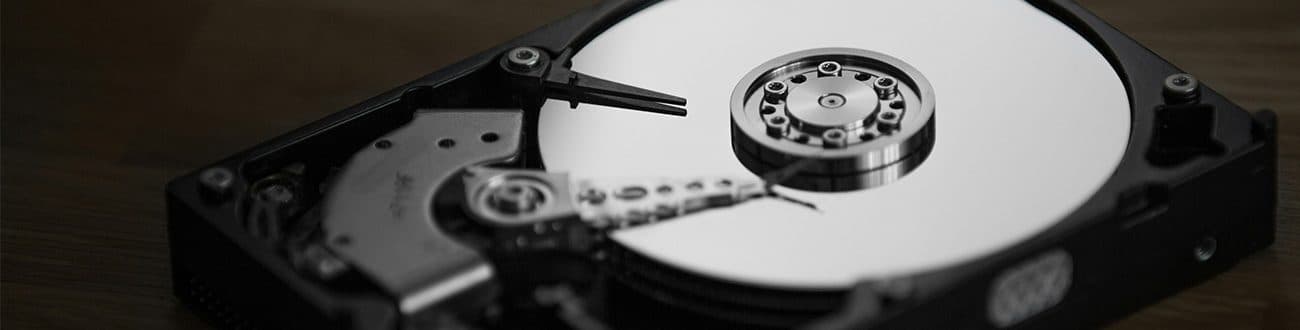
For comparison, traditional media like hard drives have a lifespan of 3 to 5 years, while magnetic tapes can last up to 30 years, but both are prone to "bit rot" or data degradation. The borosilicate glass used by Microsoft promises to eliminate this concern, offering an archival solution that requires no frequent maintenance or periodic data migrations.
Researchers also highlight that data access on the glass plates is faster than on other long-lasting optical media. Although capacity is lower—about half of fused silica glass—the reduced cost broadens usage possibilities for institutions needing to preserve large volumes of information for centuries, such as national libraries, scientific databases, and government archives.
Developments and Outlook
Microsoft has not yet announced a timeline for commercial release, as the technology is still in research and durability testing. The expectation is that in the coming years development will progress to industrial-scale prototypes, paving the way for new permanent archival standards.
If durability and cost results are confirmed in large-scale tests, the borosilicate glass solution could become a viable alternative for preserving critical data. The IT sector, facing growing challenges with data volume and the need to ensure integrity for decades or centuries, is closely watching the project’s next steps.
The key message is that borosilicate glass data storage developed by Microsoft combines millennial durability with low cost and fast access, despite having lower capacity than competing solutions. It promises a leap in digital archiving, directly impacting institutions focused on long-term data preservation.
Content selected and edited with AI assistance. Original sources referenced above.