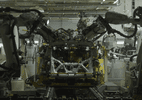
Robots Control Vehicle Production in Automated Factories in China
TL;DR
The Chinese automotive industry is innovating with so-called dark factories, where production is almost entirely managed by robots and Artificial Intelligence (AI).
Automated Factories in China Use Robots for Continuous Production
The Chinese automotive industry is innovating with so-called dark factories, where production is almost entirely managed by robots and Artificial Intelligence (AI). This model allows vehicles to be manufactured continuously, without breaks for downtime.
What Are Dark Factories?
Dark factories are production units that operate autonomously. They utilize robots to carry out tasks such as assembly and painting, minimizing the need for human intervention in activities. According to experts from McKinsey, this technology enhances operational efficiency and reduces costs.
The Transformation of the Automotive Sector
This change in the Chinese automotive sector has significant implications. According to a study by Deloitte, companies that adopt automation achieve a reduction of up to 30% in production costs. Of course, there are also challenges, such as the need for worker adaptation and the initial investment in technology.
Economic and Social Impact
This transformation not only improves efficiency but can also impact the job market. With increasing automation, many traditional jobs in the industry may be lost. However, new opportunities will arise in the areas of maintenance and robot programming.
The Future of Automated Factories
Dark factories represent a major change in how vehicles are produced. As technology advances, it is expected that more sectors will follow suit, further increasing automation. The challenge will be to balance technological innovation with the need to prepare the workforce for these new labor realities.
Content selected and edited with AI assistance. Original sources referenced above.