Understand How 5G, AI, and Blockchain are Transforming the Automotive Sector
TL;DR
The automotive sector is undergoing transformation due to technologies like **5G**, **artificial intelligence (AI)**, and **blockchain**. These innovations impact efficiency and safety in transportation, bringing new mobility options.
The automotive sector is undergoing transformation due to technologies like **5G**, **artificial intelligence (AI)**, and **blockchain**. These innovations impact efficiency and safety in transportation, bringing new mobility options. **Mobility as a Service (MaaS)** is a concept that highlights this revolution, enabling more democratized access to various forms of transportation.
A key component of this revolution is **solid-state batteries**, considered the "holy grail" of electric vehicles. These batteries offer higher energy density, ultra-fast charging, and superior safety, eliminating fire hazards. Companies like **Toyota** and **QuantumScape** plan to start mass production, promoting significant evolution in the electric vehicle market.
Below, we present five technologies that are redefining the industry:
5G Communications and V2X (Vehicle-to-Everything)
The **5G** technology enables real-time data exchange between vehicles, urban infrastructure, and pedestrians. This fast and low-latency connection enhances road safety with automatic alerts and optimizes traffic through smart traffic lights. Companies like **Qualcomm** are at the forefront of developing these solutions.
Blockchain in the Automotive Industry
**Blockchain** technology offers a secure and immutable record of vehicle data. Each car can have a digital passport containing information about mileage, service history, and accidents. This combats fraud and increases trust in the used car market, especially for electric vehicles.
Predictive Maintenance with Artificial Intelligence
With monitoring sensors, **artificial intelligence** analyzes data in real-time and anticipates failures. The vehicle alerts when maintenance is needed, such as brake pad replacement or battery inspection, which reduces costs and enhances road safety.
Augmented Reality in the Windshield
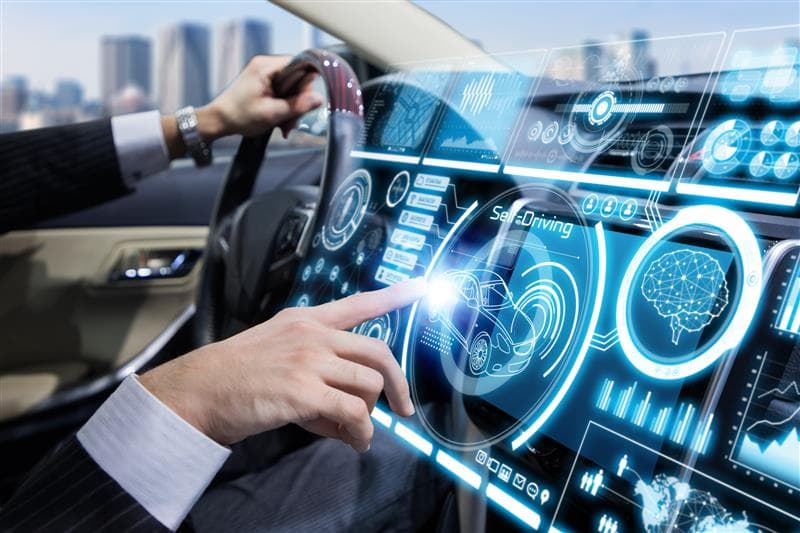
**Augmented reality (AR)** is transforming how drivers interact with their vehicles. Navigation instructions and alerts are projected directly onto the windshield, providing a safer and more intuitive driving experience. **Panasonic Automotive** is one of the companies already developing these innovative solutions.
3D Printing in Automotive Manufacturing
**Additive manufacturing** enables the creation of complex parts from digital models. This facilitates everything from rapid prototyping to on-demand production, reducing costs and lead time. Dealerships may print parts on-site, optimizing the maintenance of electric vehicles.
Mobility as a Service (MaaS)
These technologies are interconnected in a new mobility model: **MaaS**. Users can access a variety of options, such as subscription cars, ride-hailing apps, and electric bikes through a single platform. This shift allows access to mobility to be more flexible.
As technologies advance, the integration of health resources and personalized data is expected to become a reality in vehicles. The vision for the future is for the car to function as an extension of the human body, providing support in critical situations. The future of mobility goes beyond simple transportation, fostering a smart ecosystem where technology integrates data and behavior, enhancing users' quality of life.
Content selected and edited with AI assistance. Original sources referenced above.